A new way to navigate
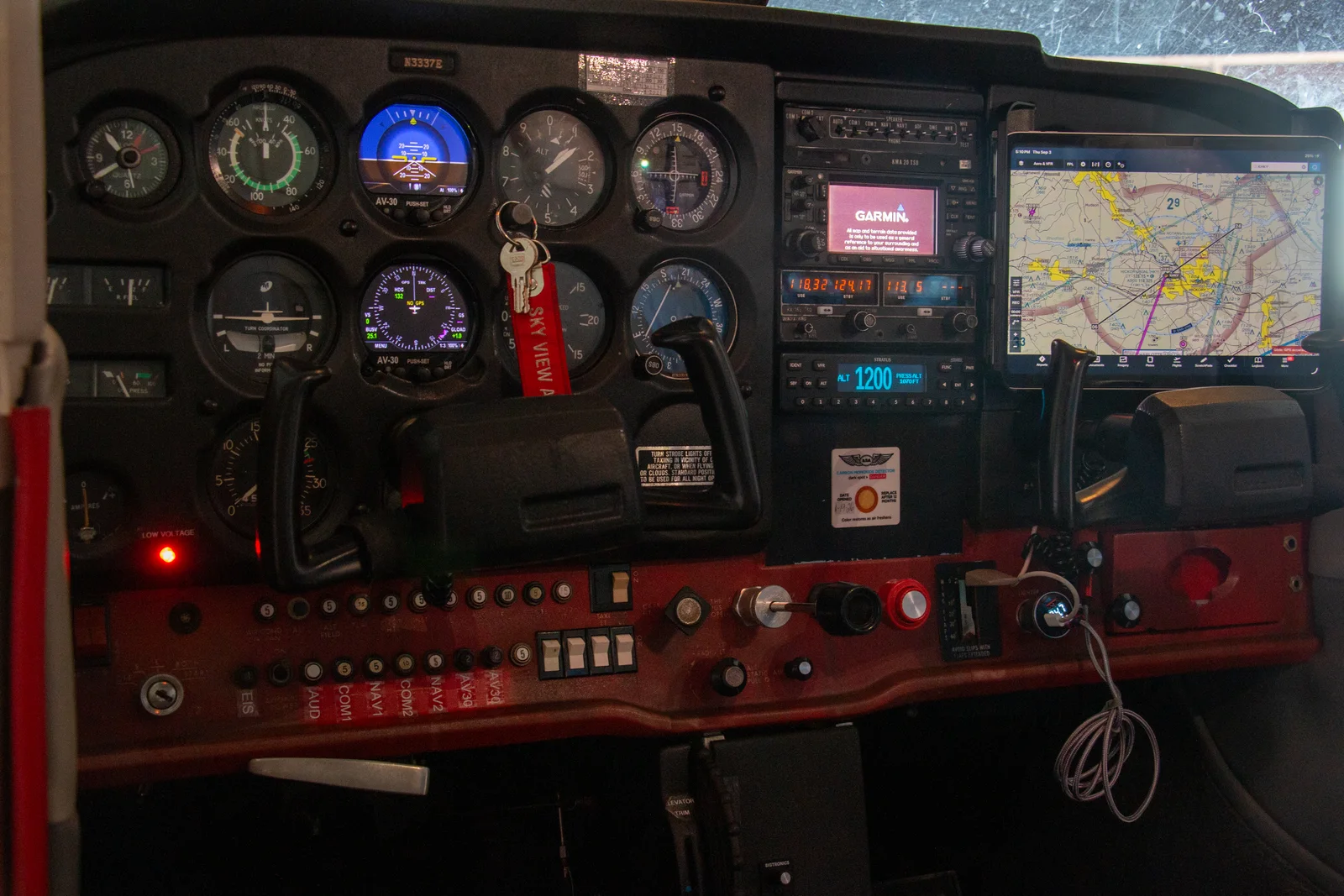
Instrument training develops the skills to control and navigate the airplane by instruments and operate within the instrument flight rules system. It adds a demanding layer of weather assessment, communication, and procedure management.
An instrument rating does not make every weather condition safe to fly. Sound judgment and personal limits remain central.
What you will work on
Your instructor can assess your existing experience and plan lessons around applicable FAA requirements.
- Instrument scan and precise aircraft control
- IFR flight planning, clearances, and radio communication
- Departures, en-route procedures, holds, and approaches
- Weather interpretation, missed approaches, and abnormal situations
Build from your existing experience
Bring your logbook and certificate details to the first planning conversation. Cross-country and instrument experience requirements depend on the training pathway and applicable regulations.
Skyview has not published a complete instrument syllabus or fixed-price package in the reviewed material. Ask about the current training plan, airplane equipment, instructor availability, and pricing.
Explore the FAA pilot guide ↗Practice on the ground, apply it in flight
Ask whether the full-motion simulator offered with CVCC suits your instrument training goals. Any credit toward FAA requirements depends on the specific device approval, instructor involvement, and applicable rule; credit is not assumed here.
Read about the simulator →